The removal van was twenty minutes late, the rain had just started, and my golden retriever Milo was sitting in the middle of the living room surrounded by boxes, looking at me with the expression dogs save for moments when they know something big is happening and nobody has explained it to them. That was moving day, and I'd spent the previous three weeks worrying about exactly one thing more than anything else: how to get my dog through it without him falling apart.
People talk about moving as stressful for humans, and they're right. But we understand what's happening. We know the boxes are going to a new place and that the sofa will turn up again. A dog just watches his whole world get packed into cardboard and carried out of the front door. Of course he's scared. My job was to make the whole thing as boring as possible for him, and mostly, it worked. Here's what I did, what went wrong anyway, and what I'd do differently next time.
The week before: packing without the panic
The biggest mistake I nearly made was packing everything in one frantic weekend. I'd seen a friend do it: boxes everywhere overnight, dog pacing, owner stressed, everyone miserable. So I started three weeks early, one or two boxes a day, and I kept Milo's stuff completely untouched until the last possible moment.
His bed stayed where it always was. His food bowl stayed in the same spot. His toys stayed in their basket. The rule was simple: his world doesn't change until it has to. Everything else could go in boxes, but his corner of the living room stayed exactly the same, right up until moving morning.
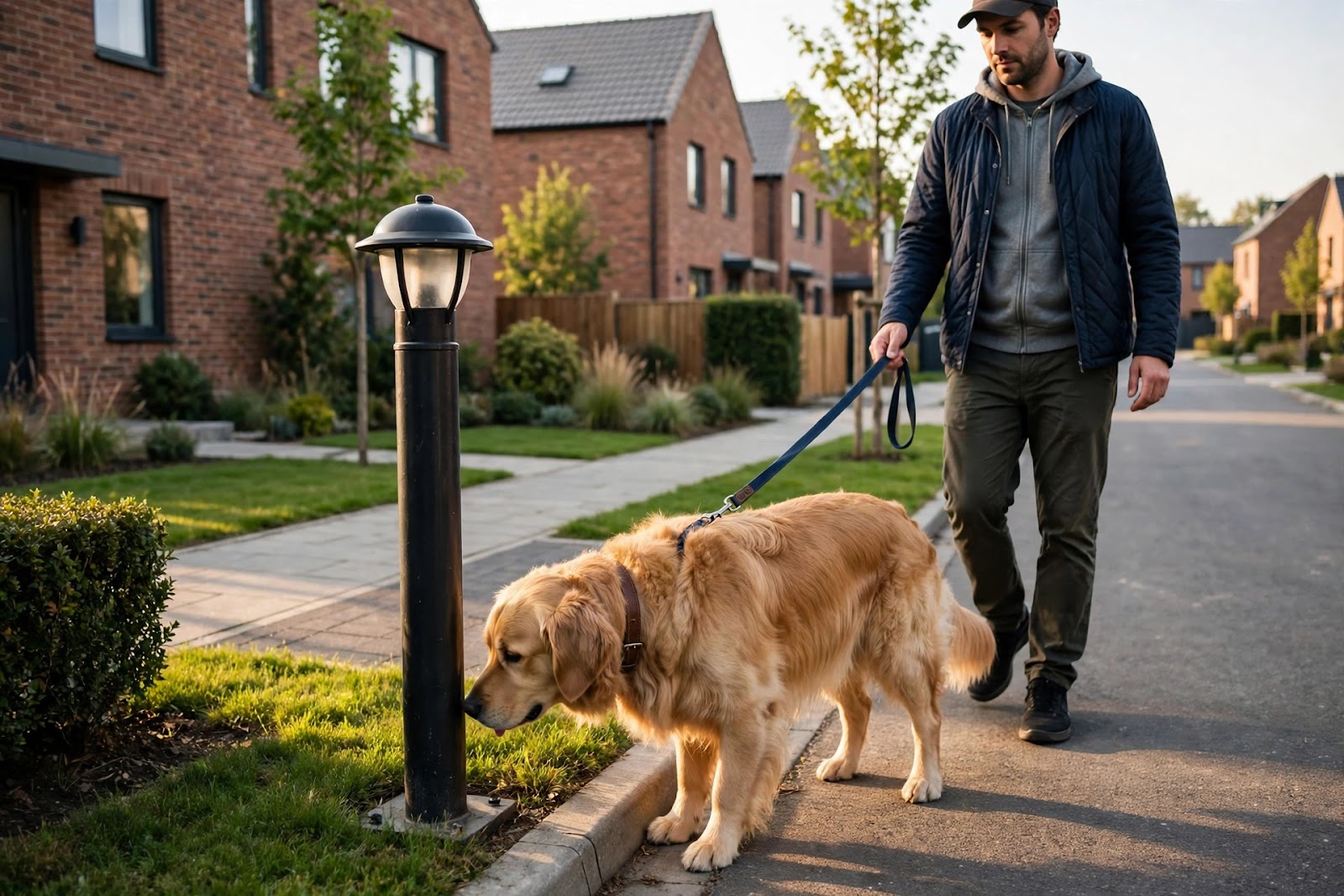
I also started taking him to the new neighbourhood a week before the move. Not a big deal, just a walk. We drove over three times, parked near the new house, and walked the streets around it. He sniffed the lamp posts, met a spaniel called Biscuit who lives two doors down, and found a patch of grass he approved of. By moving day, the new street already smelled familiar to him, and that mattered more than I expected.
One thing I got wrong in this phase: I left the empty boxes stacked in the hallway, and Milo decided the biggest one was his new bed. He slept in it for three nights. When I finally taped it up, he stood next to it looking genuinely betrayed. If I did it again, I'd keep empty boxes in a closed room. Dogs claim things fast, and taking away a claimed cardboard box is a small heartbreak you can easily avoid.
Moving day: the friend who saved us both
Here's the best decision I made in the whole move: Milo didn't spend moving day in the house at all. My friend Sarah took him for the day, from 8 in the morning until 6 in the evening. He spent it at her place, on her sofa, with her elderly labrador, getting treats and going for two long walks.
I know not everyone has a Sarah. If you don't, ask your vet or a local dog walker about day care for the day, or see if a family member can take him. Even a long morning at a friend's house helps. The point is that your dog should not be underfoot while strangers carry furniture past him, doors stand open, and the house echoes. That's a recipe for a bolted dog or a bitten removal worker, and neither is a story you want to tell.
While Milo was away, I packed his things last and labelled his box in big letters: MILO — OPEN FIRST. His bed, his bowls, two favourite toys, his lead, a bag of his kibble, his blanket, and the bag of treats. That box went in my car, not the van, so it arrived with me and I could open it the second we got to the new house.
The van arrived, the house emptied, and for the first time in six years I stood in a bare living room and felt a wave of sadness. Then I remembered Milo was at Sarah's having the time of his life, and I felt much better. Picking him up that evening, tail wagging, slightly muddy from her garden, was the best part of the day.
The first night in the new house
I brought Milo to the new house at about 6:30 in the evening, after the furniture was in and the worst of the chaos was over. The first thing I did was set up his corner before anything else. His bed went in the same spot relative to the kitchen as it had been in the old house, his water bowl filled, his blanket laid out. I wanted one square metre of the new house to already smell like home.

He walked in, sniffed every corner, and then did something that made my chest tighten: he went straight to his bed, circled three times, and lay down. He'd found the one familiar thing in a strange place, and he'd claimed it. I sat on the floor next to him for twenty minutes, just being there, while he sniffed my hand and then fell asleep with his head on my foot.
That first night, he woke me at 3am, whining. Not barking, just a soft, uncertain whine. I got up, took him to the garden, let him sniff around the new patch of grass, and brought him back inside. He settled again in about ten minutes. I slept on the sofa that night, close to his bed, and I'd do it again. The first night is not the night for tough love or new rules. It's the night for being nearby.
The next morning he was up at his usual time, tail wagging, ready for breakfast in his usual bowl in his usual spot. Dogs are more adaptable than we give them credit for, especially when the important things — food, bed, person — are all in the right place.
The first week: same routine, new streets
The best advice I got about moving with a dog came from the woman who runs our local dog walking group, and it was five words: keep the routine exactly the same. Same walk times, same meal times, same bedtime, same commands. The house changed, the streets changed, but the day didn't.
So we kept it rigid for the first two weeks. Breakfast at 7, walk at 7:30, dinner at 5:30, last garden trip at 10. I walked the same loop every morning so he could learn it properly, and I let him sniff far more than usual. A sniff walk in a new place is how a dog maps his world. I gave him twenty minutes of sniffing for every ten minutes of actual walking, and I didn't rush him once. His nose was doing the settling-in work.
By day four, he was pulling towards the park we'd found on our second walk. By day seven, he knew which house had the cat in the window and which garden had the barking terrier behind the fence. By day ten, he trotted to the front door at walk time like he'd lived there for years.
There was one wobble: on day three, he refused to go into the back garden on his own. He'd stand at the door, look out, and come back inside. I think the garden smelled strange, all new fences and unfamiliar soil. So I went out with him every time for a week, stood in the garden with him, threw his ball, and made it a fun place instead of a strange one. By the second week he was charging out there on his own again. Patience, not pushing, fixed it.
The things I wish I'd packed differently
Every move teaches you something, and mine taught me plenty. First: pack a "first night" bag for the dog, not just a box. Lead, poo bags, food, bowls, blanket, one toy, treats, and any medication. Keep it in your car, not the van. I had Milo's in the box, and the box was buried behind three other boxes in the car boot for twenty minutes while he waited. He was fine, but I was flustered, and flustered owners make nervous dogs.
Second: update his ID tag and your vet's records in the first week, not "when you get round to it". I changed his tag on day two, but I forgot the vet until week three, and if he'd needed an emergency visit in between, they'd have had my old address. It's a five-minute job. Do it on day one, while you're still in admin mode.
Third: find the new vet before you need one. I spent an evening in the first week looking up vets near the new house, reading reviews, and registering Milo. It took one phone call. Doing it calmly on a Tuesday evening beats doing it in a panic on a Sunday when your dog has eaten something odd.
Fourth: warn the neighbours. I knocked on two doors in the first week and introduced Milo, and both neighbours were lovely about it. One of them told me about the terrier behind the fence, which saved me a surprise. Dogs settle faster when the humans around them are friendly, and a quick hello costs nothing.
The garden fence and the great escape scare
The one genuinely scary moment came on day five, and it was entirely my fault. I'd checked the garden fence when we viewed the house, or at least I thought I had. What I hadn't checked was the gap under the side gate, where the ground dipped. Milo found it within thirty seconds of being let out on his own for the first time. One minute he was sniffing the fence line, the next his nose was under the gate and his shoulders were following.
I caught him in time, called him back, and he came straight away, tail wagging, proud as anything. But my heart was thudding. A new street, unfamiliar traffic, a dog who didn't know his way home yet — that gap could have ended very differently. I spent that evening on my knees in the garden with a bag of gravel and a spare piece of wood, filling the gap and blocking it properly. It took twenty minutes and cost me nothing, because the wood was left over from a broken shelf.
Check the garden before moving day, not after. Walk the whole fence line slowly, look for gaps at the bottom, loose panels, and gates that don't quite latch. Get down to your dog's eye level if you can; you'll spot things standing up that you'd never notice from above. And for the first week, don't leave your dog alone in a new garden at all. Stay with him, watch what he sniffs at, and fix what he finds. Milo found the gap on day five because I finally relaxed. Relax on day fourteen, not day five.
Meeting the neighbours' dogs (and learning the local rules)
Every street has its own dog politics, and the first week is when you learn them. Our street has a terrier behind a fence who barks at everything, a spaniel called Biscuit who is friends with every dog alive, and a rescue lurcher who is nervous and needs space. I learned all of this in the first three days, just by walking Milo at the same time each morning and watching what happened.
Biscuit's owner stopped me on day two and told me which houses had dogs, which gardens to avoid, and where the best off-lead field was. That five-minute chat saved me a week of trial and error. People who have lived on a street for years know things no map will tell you, and most dog owners love sharing it. Ask. The worst that happens is a friendly chat.
I also made a point of keeping Milo on the lead for the first week, even on streets where other dogs were off-lead. He didn't know the area, he didn't know the other dogs, and if something had startled him, I wanted to be attached to him. By week two, when he knew the loop and I knew the regulars, I relaxed. Slow and boring beats fast and sorry, every time.
What moving taught me about my dog
Here's the thing I didn't expect: the move made Milo more confident, not less. In the old house, he had his routines and his spots, and he never had to think about them. In the new house, he had to learn everything again, and he did it in about ten days. Watching him figure out the new garden, the new park, the new neighbours' dogs, reminded me that dogs are tougher than we think. They don't need everything to stay the same. They need the important things to stay the same, and they need us to be calm while the rest changes.
If you're about to move with a dog, here's my honest summary. Start packing early and keep his stuff normal until the last day. Get him out of the house on moving day if you possibly can. Set up his corner first in the new place. Keep the routine identical for two weeks. Let him sniff everything. Sleep near him the first night. And don't panic if he has a wobble on day three; a wobble is normal, and patience fixes it faster than any trick.
Milo now has a favourite spot in the new house: a sunny patch by the back window where he sleeps every afternoon. He found it himself on day two, and he's barely left it since. The boxes are gone, the house feels like ours, and the dog who sat surrounded by cardboard looking worried now runs to the front door when he hears the lead. Home, it turns out, is wherever his bed and his person are. Everything else is just an address.


