The first time I needed a dog sitter, I did what most people do: I asked around, took the first recommendation that came up, and handed my keys to a near-stranger. It went fine. The second time, I used an app, picked the cheapest sitter with good reviews, and it went badly enough that I came home early from a weekend away. The third time, I did it properly — slowly, carefully, with a checklist and a trial run — and I found someone my dog now adores. The difference between the second sitter and the third wasn't luck. It was method.
I'm writing this because nobody tells you how to vet a dog sitter, and the stakes are weirdly high. This is a person who'll have your keys, your alarm code, and your dog. The wrong choice isn't just an inconvenience; it's the reason you spend a whole weekend away checking your phone every ten minutes instead of enjoying yourself. I learned that the hard way, twice, and the system I use now is the result of those two mistakes.
Sitter number one: the nice neighbour
The first sitter was a neighbour's daughter, home from university for the summer, lovely girl, grew up with dogs. I asked her to pop in twice a day while I was away for a long weekend — feed him, let him out, give him a fuss. She did all of it, and she texted me photos, and he was fine. I came home to a happy dog and a clean house.
So why didn't I just keep using her? Because the arrangement had no depth to it. She was lovely, but she wasn't experienced with a dog who pulls on the lead, and my dog is strong. She told me, honestly, on the last day, that he'd dragged her across the park when he saw a squirrel. She'd been scared, and she'd handled it well, but it was luck, not skill, that nobody got hurt. Pop-in visits were fine for a calm weekend, but I realised I needed someone who could actually handle my dog, not just feed him.
Sitter number two: the app, the reviews, the mistake
The second sitter I found on a pet-sitting app. Five stars, forty-odd reviews, a friendly profile photo with a golden retriever. The price was the lowest in my area, which I told myself didn't matter, but of course it mattered — it was the reason I picked her over two others who cost more. We did a quick meet-and-greet, twenty minutes, she gave him a treat, he liked her, I booked her for a Friday-to-Sunday stay while I visited my sister.
The problems started on Friday evening. Her updates were vague — "he's doing great!" with no photo, no detail. On Saturday I asked whether he'd eaten his dinner and she replied three hours later saying yes, he'd eaten "most of it." Most of it? He always eats all of it. On Sunday morning she texted to say she was running late and would be there "in a bit," which turned out to be two hours later. When I got home, his water bowl was nearly empty, there was a puddle by the back door, and he'd clearly been alone for longer than he should have been. He was fine — excited to see me, no harm done — but I spent the drive home feeling sick, and I knew I'd never use her again.
What went wrong? Almost everything about my vetting. I picked on price. I did a twenty-minute meet-and-greet instead of a proper trial. I didn't ask for references. I didn't ask how many other dogs she'd be looking after at the same time — it turned out she had three that weekend, and mine was the one who got the least attention. And I didn't set any expectations about updates, so she had no reason to think "he's doing great!" wasn't enough. Every one of those gaps was mine, not hers.
What I changed
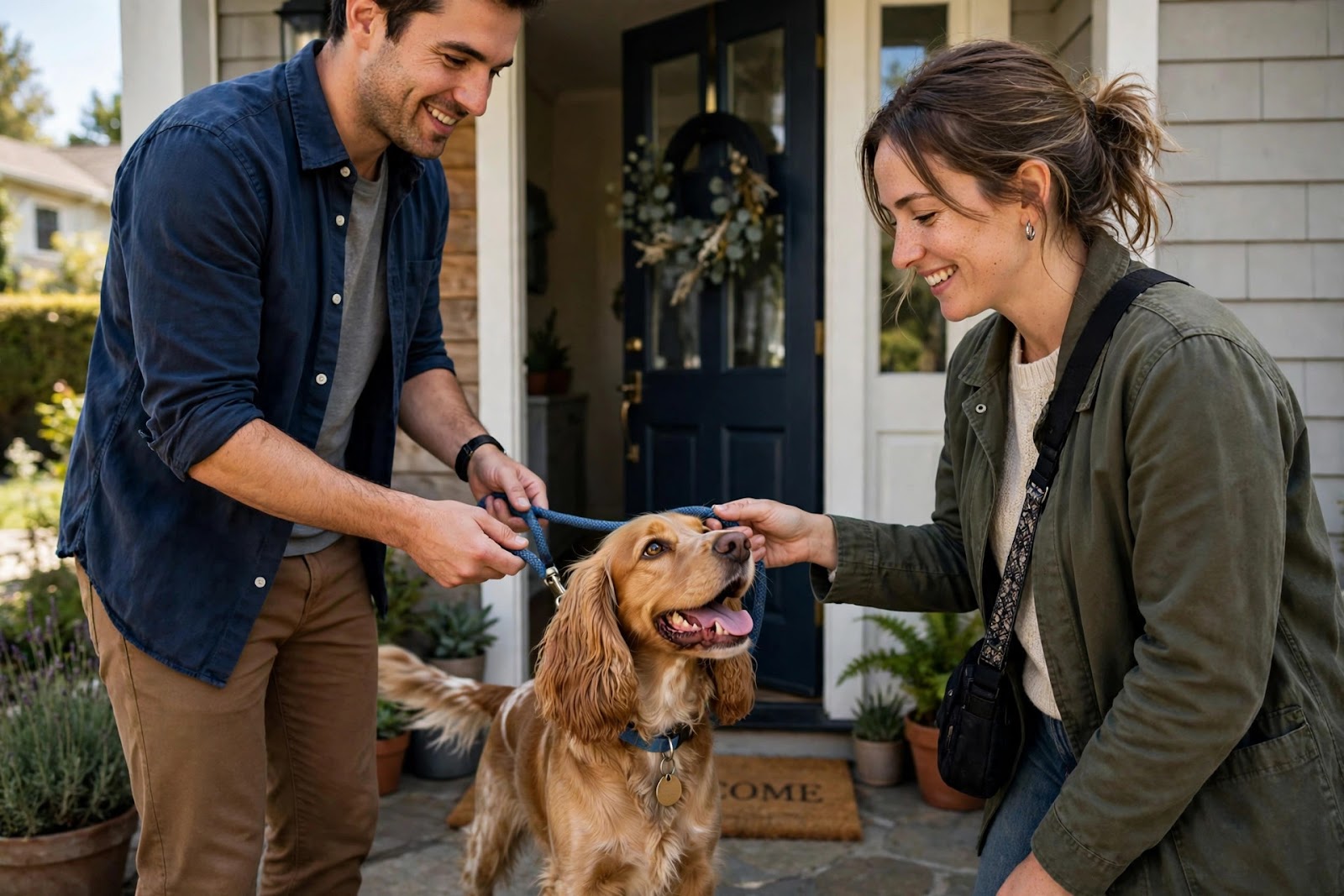
After that weekend, I sat down and wrote out what I actually needed, and the list was longer than I'd expected. Someone experienced with medium-to-large dogs, who could handle pulling. Someone who'd look after no more than one or two dogs at a time. Someone who'd stay in my home, because my dog settles better in his own space. Someone who'd send a photo and a proper update twice a day. And someone I could actually reach by phone, not just by app message, in an emergency.
I also decided, before I even started looking, what I was willing to pay. I'd been treating the price as the deciding factor, and that's backwards. The sitter is looking after the thing I love most in the world, in my house, with my keys. Saving a few pounds a day on that is false economy of the worst kind. I set a budget at the middle of the local range — not the cheapest, not the most expensive — and I stuck to it.
This time, I looked in three places: the same app, a local dog-walking group, and a recommendation from my vet's receptionist, who it turns out knows everything about everyone in local dog circles. The vet recommendation was the one that worked, and I've since learned that vet staff and dog trainers are the best source of sitter recommendations, because they hear the stories when things go wrong. Ask them. They'll tell you.
The vetting I do now
I now interview sitters the way I'd interview someone for a job, because it is a job. The first step is a phone call, not a message. I want to hear how they talk about dogs — do they ask about my dog, or do they talk mostly about themselves? The good ones ask questions. What breed, how old, what's he like on the lead, any fears, any habits? A sitter who doesn't ask questions in the first five minutes isn't curious enough about your dog, and curiosity is the thing that keeps dogs safe.
Then I check the practical stuff, and I do it directly, without embarrassment. Are they insured? Can I see the policy? Have they done a first-aid course for pets? Can they give me two references I can actually call? The good sitters expect these questions and answer them happily. The ones who get defensive or vague are telling you something. One sitter I spoke to said she was "basically insured" through the app, which meant she wasn't insured at all, and I thanked her and moved on.
The meet-and-greet is next, and I do it properly now — at my house, for at least an hour, with a walk included. I watch how they are with my dog. Do they let him sniff them first, or do they go straight in for a cuddle? Do they notice when he gets overexcited and calm things down, or do they wind him up? Do they ask where the lead and treats are kept? I also watch how my dog reacts to them, but I've learned not to over-weight that. My dog likes everyone. He'd happily go home with the postman. His opinion is a data point, not a verdict.
Then comes the part that made the biggest difference: the trial run. Before I booked the sitter for a real trip, I paid her for a single overnight stay while I stayed at my sister's, twenty minutes away. One night, full price, and I told her it was a trial. She sent updates exactly as we'd agreed, she followed his routine to the letter, and when I came home the next morning he was asleep on his bed with his head on her shoe. That trial cost me one night's fee, and it bought me complete confidence. I will never book a sitter for a real trip without a trial again.
The two phone calls that told me the truth
The trial run gets all the credit in this story, but the two reference calls I made before it were what actually sold me on our sitter — and one of them nearly talked me out of her. I phoned both references she gave me, and I didn't ask the polite question. I asked specific ones: did she ever cancel at short notice? Did your dog eat normally while she was there? How fast did she reply to messages? Did she leave the house tidy? A reference who has to think before answering is telling you more than one who gushes.
The first reference, a woman named Carol who has two spaniels, told me the sitter once stayed an extra three hours because one of her dogs had an upset stomach and she didn't want to leave him alone. She didn't charge for it. That single detail told me more than forty five-star app reviews ever could. The second reference was more useful in a different way: she said the sitter is “brilliant but chatty” and that her updates could run long, which is exactly the kind of honest, boring detail a real reference gives you. Both women also said the same thing unprompted — that she sends a photo without being asked.
One more thing the calls taught me: ask references what went wrong, not just what went right. Carol said the sitter once forgot to lock the back gate — not the front door, the back gate — and she now double-checks it and tells new clients about it herself. A sitter whose worst story is a forgotten gate latch, told to you by her own reference, is a sitter you can trust. If a reference can't name a single small thing that went wrong, either the sitter is perfect or the reference isn't really a reference.
What I ask for in writing

Before every stay now, I send the sitter a short written note — not a novel, just one page — with the essentials. His feeding amounts and times. His walk route and the usual length. The vet's number and the emergency vet's number. Where the spare key is. The alarm code and how to set it. One line about his quirks: he's scared of the hoover, he steals socks, he pulls toward squirrels. And one line about what to do if something goes wrong: call me first, then the vet, and don't worry about the cost.
I also tell the sitter explicitly what I expect in updates: a photo and two or three sentences, morning and evening. Not a running commentary, just enough that I know he's eaten, walked, and settled. Good sitters do this naturally. Making it explicit means there's no awkwardness about it, and it means I can actually relax on a trip instead of refreshing my messages every half hour wondering whether silence means something's wrong.
And one thing I do that some people find over the top: I keep a camera in the living room, and I tell the sitter it's there. Not hidden, not secret — I mention it in the first conversation. It's for the dog's safety and mine, and every sitter I've used has been completely fine with it. The one who wasn't fine with it didn't get the job, and that told me what I needed to know.
The sitter we have now
We've used the same sitter for eight months now, and the difference is night and day. My dog hears her voice at the door and does a full-body happy wiggle. She sends photos that make me laugh — him asleep on her lap, him "helping" her in the garden, him wearing a bandana she bought him. She texts me when he's eaten, when he's walked, when he's settled for the night. On our last trip, I checked my phone twice in four days. Twice. After the second sitter, I'd checked it about forty times a day.
She costs more than the app sitter did. About thirty percent more, for the record. And I would pay double. The peace of mind is worth more than the difference, and honestly, the difference is the cost of two takeaway coffees a day. That's the maths that matters: the price of a coffee versus a weekend of worrying about whether your dog has water.
The red flags I watch for now
If I had to boil all of this down to a short list, it would be this. Be wary of a sitter who won't do a meet-and-greet at your house. Be wary of one who doesn't ask questions about your dog. Be wary of the cheapest option, of anyone who looks after lots of dogs at once without a clear plan, of vague updates, and of anyone who can't give you a reference you can actually phone. And trust your own gut: if something feels off in the first conversation, it probably is, and there are other sitters.
The other thing I'd say is to start looking before you need one. I found our sitter two months before our first trip with her, and the trial run happened a month before that trip. If you start looking the week before you travel, you'll take whoever's available, and whoever's available at short notice is not always whoever's best. A good sitter books up early, especially around holidays. Find yours now, do the trial, and then when the trip comes, the only thing you have to think about is packing.
I still think about the Sunday I came home to the empty water bowl, and I still feel annoyed with myself for cutting corners. But it taught me something useful: choosing a dog sitter is one of those jobs where doing it slowly and carefully feels like overkill until the one time it isn't. My dog is asleep on his bed as I write this, and his sitter's number is in my phone, and the next time I go away, I'll sleep properly. That's what a good sitter buys you. Not just a fed dog — a quiet mind.


