The Bowl Standoff in My Kitchen
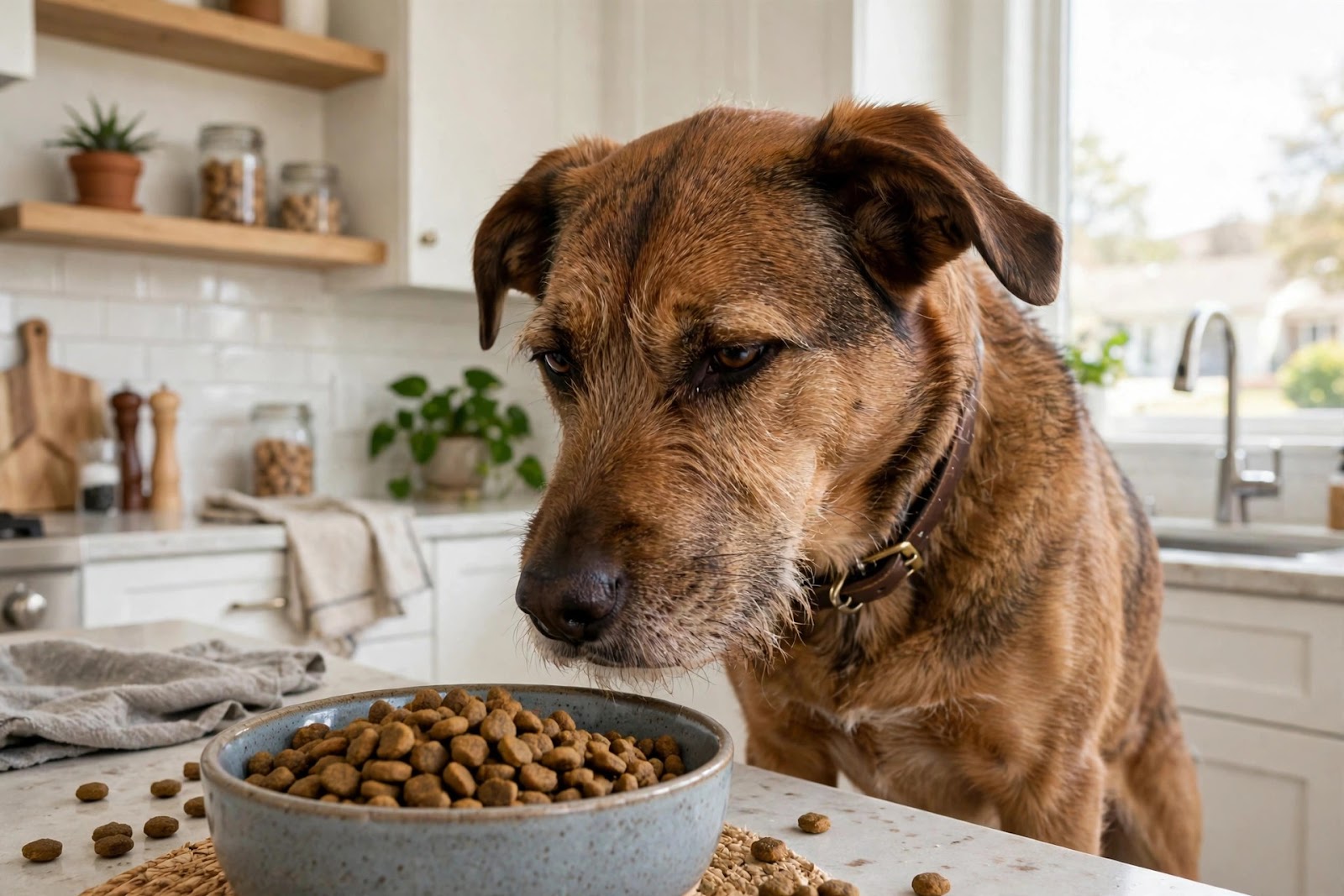
My dog Biscuit has strong opinions about dinner, and for a long time I let those opinions run my kitchen. She would sniff her bowl, look up at me with deep disappointment, and walk to the sofa. I would follow her with the bowl like a waiter who had brought the wrong order. Sometimes I added chicken. Sometimes cheese. Sometimes I warmed the food, stirred it, and presented it again like a new dish.
It worked, in the worst way. She learned that refusing dinner produced better dinner. Within a month she would not touch plain kibble at all. She held out for toppings, then held out for better toppings. I was cooking side dishes for a dog who had once happily eaten anything, and I was annoyed at both of us. She was not sick, she was not thin, and she played like a maniac at the park. She was just picky, and I had trained the pickiness myself.
The day I changed course was embarrassing. A friend came for dinner, watched Biscuit ignore her bowl, and watched me immediately reach for the fridge. My friend said, gently, “You know she is training you, right?” I laughed, but I went to bed thinking about it. She was right. I had turned mealtimes into a negotiation, and Biscuit was winning every round because I kept changing the terms.
What I Stopped Doing First
The first thing I stopped was the topping parade. No more three toppings, no more warming and re-serving, no more following her around the house with the bowl. I put the bowl down, gave her fifteen minutes, and picked it up whether she ate or not. That sounds harsh written down. In practice it was the kindest, clearest thing I had done in weeks.
The first two days were hard. She ate about half her breakfast on day one and skipped dinner entirely on day two. I sat on my hands, literally, because I wanted to fix it. By day three she ate most of her breakfast. By day five she was finishing meals again, plain bowl, no drama. She was not starving herself to make a point. She was learning that dinner had a time and a place, and that the food in the bowl was the food on offer.
I also stopped free-feeding. Biscuit used to have a bowl sitting out all day, which meant she grazed a few bites whenever she felt like it and never built up a real appetite. Once meals had a start and a finish, she actually seemed hungry at mealtimes, which sounds obvious now. A dog who snacks all day has no reason to care about dinner. I keep water out all day, always, but food comes out twice a day and goes away after fifteen minutes.
One Spoon, Not a Buffet
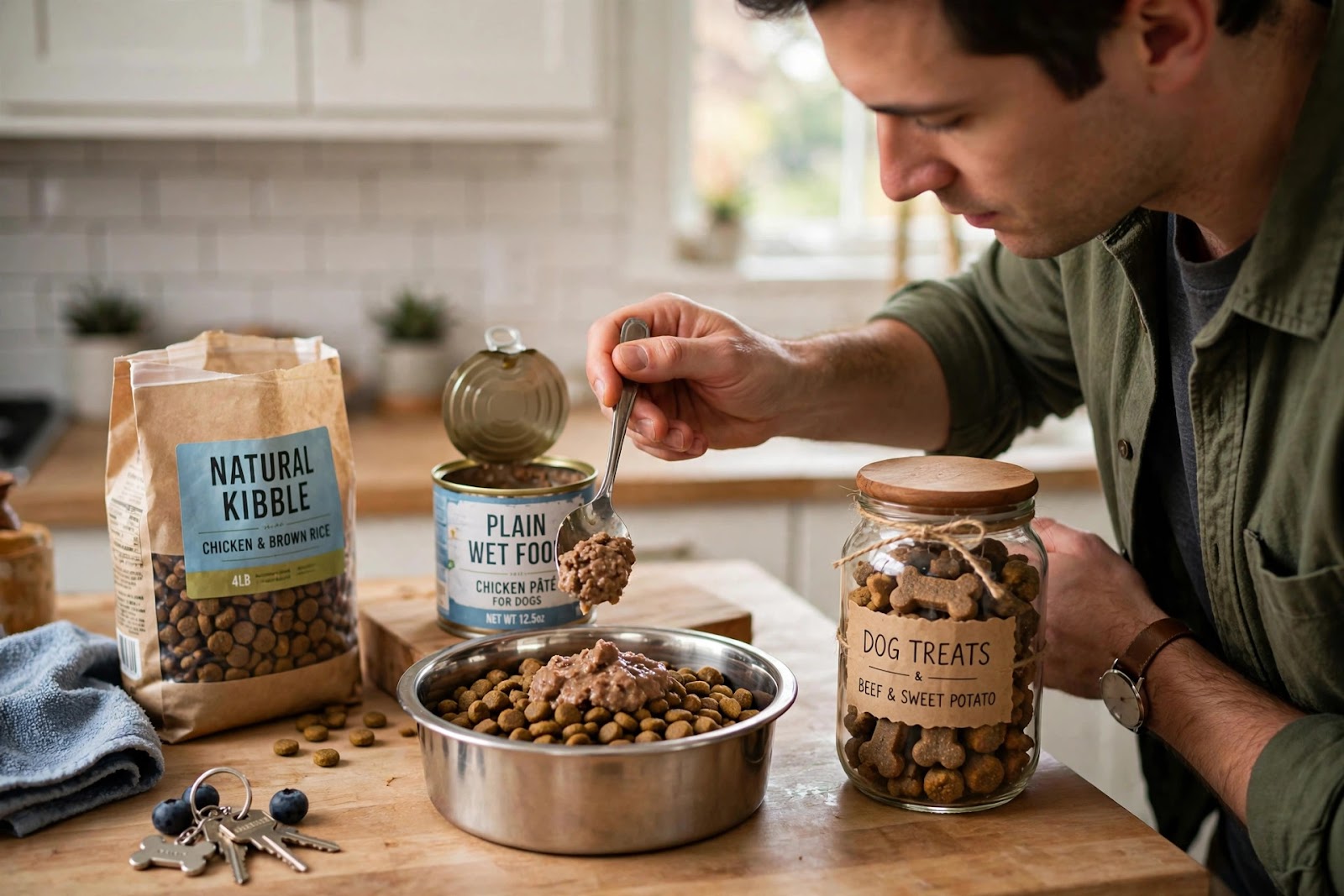
I did not go cold turkey on flavour, because I am not a monster and Biscuit is my friend. I kept exactly one simple topper: a spoonful of plain wet food mixed through her kibble, the same one every day. One spoon, not a buffet. The rule matters. When the topper is the same every day, it stops being a negotiation. It is just how dinner looks in our house.
That spoon does real work too. It makes the kibble smell more interesting and stops the dry bits from rattling around the bowl like gravel. I mix it in properly instead of laying it on top, because Biscuit used to lick the topper off and leave the kibble behind like a kid eating the icing off a cake. Mixed in, she has to eat the whole thing to get the good stuff. Sneaky? Maybe. Effective? Completely.
I also stopped switching brands every time she turned her nose up. I had a cupboard full of half-open bags: salmon, lamb, chicken, something with sweet potato on the label. Every switch taught her that holding out brought a new flavour. I picked one food that suited her, checked the feeding guide on the bag, and stuck with it for six weeks before judging anything. Six weeks felt long. It was the first time I actually gave a food a fair chance.
Treats Were the Secret Problem
Here is the part I did not want to admit: treats were ruining dinner. Biscuit got a biscuit for sitting, a biscuit for coming inside, a biscuit because she looked cute near the treat jar, and a chew in the afternoon that was basically a second lunch. No wonder she was not hungry at six. She had eaten all day, just not from her bowl.
I cut treats down to a small handful a day, and I made them tiny. I break big biscuits in half, sometimes in quarters, because Biscuit cares about getting something, not about its size. Training treats are now pea-sized pieces of her regular kibble from her daily portion, which sounds boring but works fine. She still gets excited. She is a dog. A tiny piece of kibble delivered with enthusiasm is still a party to her.
The other change was timing. No treats in the hour before dinner. I used to hand her a biscuit at 5:30 while I cooked, then wonder why she ignored dinner at 6. Now the kitchen is a treat-free zone before meals. It took about a week for her to stop begging at the counter, and dinner improved in the same week. I am not claiming a perfect cause-and-effect study here. I am saying the two things changed together, and I am not going back to test it.
The Picky Days That Still Happen
Biscuit still has picky days. Hot weather kills her appetite a bit. A stressful day with visitors makes her skip a meal. A new bag of the same food sometimes smells slightly different and she eyes it suspiciously for a day. I do not panic anymore. One skipped meal is not a crisis for a healthy, active dog who eats normally the rest of the week.
What I watch for is a pattern, not a single meal. Two or three days of refusing food, or a dog who is also lethargic, drinking far more water than usual, or showing other changes, is a different story. That is when I stop experimenting and get advice from a professional. I am not a vet, and this article is not medical advice. It is a story about a healthy picky dog and an owner who made mealtimes worse by trying too hard.
On an ordinary picky day, my routine is boring on purpose. Bowl down at the usual time, same food, same spoon of topper, fifteen minutes, bowl up. No coaxing, no hand-feeding, no emergency chicken. Biscuit usually eats by the second day. Sometimes she eats half and walks away, and I let it go. Dinner is not a test she has to pass. It is just dinner, and it will be there again in the morning.
The Guest Test
The real test came when my brother visited for a weekend. He watched Biscuit eat her dinner without fuss and said, “Wait, this is the same dog who made you cook chicken at midnight?” I laughed, but it hit me how far we had come. Guests used to witness the whole show: the sighing, the bowl-carrying, the fridge raid. Now dinner is a non-event, which is exactly what I wanted.
My brother tried to slip her a biscuit at 5:45, right before dinner, out of kindness. I stopped him, and I felt rude for about three seconds. Then I explained the rule, and he got it. Everyone who feeds Biscuit needs to know the same rules, or the dog just learns that different people have different menus. That is a lesson for any household with more than one feeder. Write the rules on the fridge if you have to. I did, for a week, until everyone remembered.
Consistency across people matters as much as consistency across days. Biscuit is smart. She figured out within days that my brother was a soft touch and I was not, and she worked that gap hard. Once we closed it, her eating settled again. If your dog eats fine for you but turns picky for someone else, check what that someone else is offering. The answer is usually in their pocket, in biscuit form.
What Finally Worked, in Plain Terms
If you stripped my whole saga down to the rules that actually stuck, there are five. Meals at the same times, twice a day. Bowl down for fifteen minutes, then up. One consistent topper, mixed in, not a parade. Treats small, counted, and kept away from mealtimes. And no brand-hopping every time she sighs at the bowl.
None of that is exciting. There is no secret ingredient, no magic bowl, no supplement that fixed her. The fix was me becoming predictable. Dogs love predictable people, even when the predictable thing is a plain bowl of kibble. Biscuit eats dinner now without a performance, and I eat my own dinner without a dog staring at me like a disappointed food critic.
Last week she did something that made me laugh out loud. I put her bowl down, she sniffed it once, and she ate the whole thing while I was still washing my hands. No sigh, no sofa protest, no negotiation. Then she looked up, licked her lips, and trotted to her bed for a nap. That is the whole victory. Not a clean bowl every single time, but a dog who trusts that dinner is dinner, and an owner who finally stopped auditioning new menus every night. If your dog is running the same show in your kitchen, try the boring rules for two weeks. You might be surprised how quickly the audience leaves and dinner just happens. The kitchen gets quieter, the bowl gets emptier, and everyone eats in peace.


