I brought Milo home on a rainy Saturday, and I had done everything the internet told me to do. New bed by the window. Shiny bowls. A basket of toys that looked like a pet shop had exploded in my living room. Milo walked in, took one look at all of it, and hid behind my sofa for four hours. That was my first lesson, and honestly the most important one: a rescue dog's first week isn't about the stuff you bought. It's about how quiet you can be.
Milo was two, a scruffy golden-brown mix with ears that never quite agreed with each other. The shelter said he was friendly, and he was — with the staff, in a place he knew. My flat was a different planet. New smells, new sounds, a washing machine that hummed like a small angry animal. Of course he hid. I just hadn't expected it to feel so personal, like I'd been rejected by a dog I'd known for twenty minutes.
Day one: let them disappear if they need to
The biggest mistake I nearly made was coaxing him out. I sat on the floor with treats, calling his name in that high voice people use with babies, and he pressed himself flatter against the wall. So I stopped. I put a bowl of water near the sofa, dropped a few treats halfway between us, and went to make tea. Twenty minutes later I heard the soft click of his nails on the floor. He'd come out on his own terms, and that changed everything.
If your new dog hides, don't take it as failure. Give them one small safe corner — a crate with the door left open, or a quiet spot behind furniture — and let that be home base. I kept Milo's crate in the corner of the living room with an old blanket draped over the top, and I never, ever shut him inside it that first week. A crate should feel like a bedroom, not a cell, and the fastest way to ruin that feeling is to use it as a punishment or a lock-up.
The routine that did more than any toy
By day two I had a routine, and I stuck to it like my life depended on it. Breakfast at seven, out to the garden straight after, a short walk at lunch, dinner at six, last garden trip at ten. Same spots, same order, same calm voice. Dogs coming from a shelter have had their whole world rearranged, so boring is actually comforting. Predictability told Milo what would happen next, and that made the unknown parts of my flat less scary.
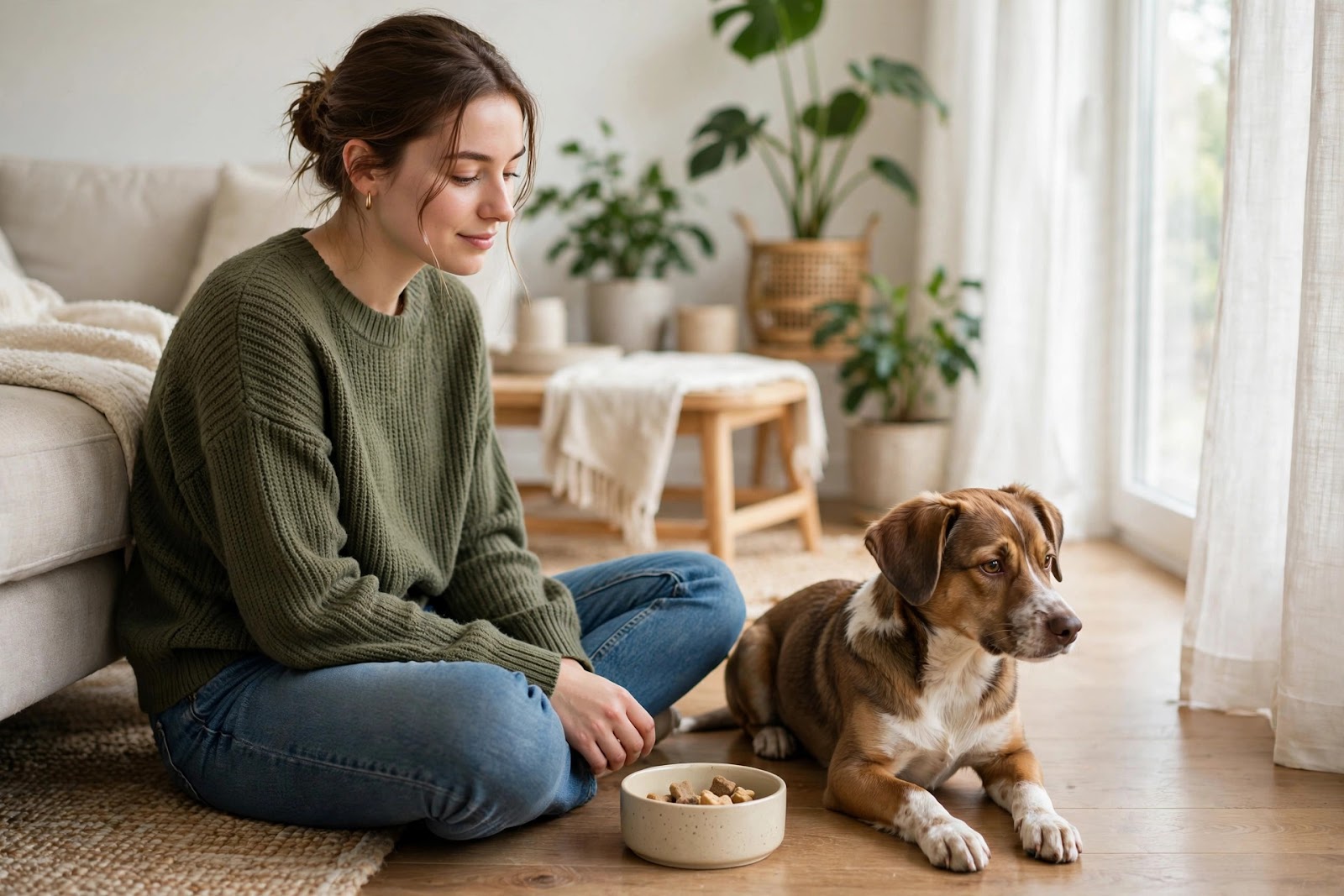
Meals were the real breakthrough. I fed him in the same spot, in the same bowl, and I sat nearby reading a book instead of hovering over him. On day one he ate two mouthfuls and walked away. On day three he finished the bowl while I was still on the same page. Food is trust in dog language, and a dog that eats in front of you is a dog starting to believe you're safe.

Keep the first week small on purpose
Here's the part I got wrong at first and then fixed: I wanted to show Milo off. My sister wanted to visit, my neighbour wanted to meet him, and I nearly said yes to everyone. Then I imagined being dropped in a stranger's house and having six new people lean over me on day two. I cancelled the visits. For seven days, it was just me, Milo, and the occasional calm walk where we didn't stop to chat with every dog owner in the park.
That doesn't mean you hide your dog away forever. It means you build the foundation first. Short garden trips beat long adventures in week one. One quiet room beats a tour of the whole house. If you have kids, keep first meetings short, seated, and treat-led — no chasing, no grabbing, no squealing right in the dog's face. Milo met my sister on day eight, on his own turf, with a pocket full of chicken. He leaned against her leg within ten minutes. Day two would have been a different story.
The 3 a.m. test (and what got us through it)
Night three was the worst. Milo woke at 3 a.m., paced the hallway, and whined — not loudly, just this low, worried sound that made my chest ache. I wanted to bring him into my bed. I didn't, and I also didn't ignore him completely. I slept on the sofa next to his crate for two nights, with my hand resting near the door where he could sniff it. He settled within half an hour on the second night, and by night five he was sleeping through in his crate without me camped beside him.
If your rescue dog is restless at night, check the simple things first. Did they get a last toilet trip? Is the room too cold, too warm, too silent? A ticking clock or a quiet radio helped Milo, oddly enough — the shelter was never silent, so total silence felt strange to him. And a worn T-shirt of mine in his bed gave him something that smelled like me without me having to be awake at 3 a.m. for the rest of my life.
What I wish I'd known about the first vet visit
I booked a vet check for day four, and in hindsight that was too soon. The car ride stressed Milo out, the waiting room had three barking dogs, and he shook the whole way home. If I did it again, I'd wait until day ten or so, unless something clearly needed attention sooner. When you do go, take treats, take their blanket, and ask the clinic if there's a quiet time of day. Most clinics will happily tell you when the waiting room is calmest.
Also, bring the paperwork the shelter gave you and actually read it before you go. Milo's notes said he hated having his ears touched, which explained why he'd flinched when I tried to check them on day one. Knowing that in advance would have saved us both an awkward moment. Shelters know these dogs. Their notes are gold — read every line, even the boring ones.
Accidents will happen — and they're not revenge
Milo had three accidents in the house that first week, and every single one was my fault, not his. I'd waited too long between garden trips, or I'd missed the circling-and-sniffing signal because I was checking my phone. Rescue dogs often aren't fully house-trained in a new place, even if they were perfect at the shelter. New floors, new smells, new nerves — of course there are accidents.
What worked was boring and unglamorous: out first thing in the morning, out after every meal, out after every nap, out after every play session, and out last thing at night. I set a timer on my phone for every two hours during the day, and I praised him like he'd won a prize every time he went outside. No scolding for accidents, ever. Shouting at a nervous dog for toileting indoors doesn't teach them where to go — it teaches them to hide it from you, which is much worse. Clean it up with an enzyme cleaner if you can, because regular cleaners leave a scent that says "toilet here" to a dog's nose, and move on.
Teaching his name the lazy way
One thing I did right, almost by accident, was how I taught Milo his name. I didn't drill it. Whenever he happened to look at me, I said his name in a warm voice and gave him a treat. Say name, dog looks, treat appears. Ten times a day, no pressure, no test. By day four he was turning his head when I said "Milo" from the next room, and that one small skill made everything else easier — recall, walks, even getting his attention before he bolted toward a squirrel.
The trick is to never use their name for something bad. I never called "Milo!" and then did something he hated, like a bath or nail clipping, in that first week. His name needed to mean "good things happen when you hear this," and I guarded that like a secret. If you need to call your dog for something they won't enjoy, go and get them calmly instead. It sounds fussy, but it pays off for years.
What to buy, and what I wish I'd skipped
Looking back, the things Milo actually used in week one were: his crate, two bowls, a lead, a bag of the same food the shelter had been feeding him, a handful of treats, and one old blanket. That's it. The fancy bed went unused for a month — he preferred the floor by the sofa, where he could see the door. The toy basket? He picked one squeaky duck and ignored the rest for weeks.
So if you're preparing for a rescue dog, spend your money on the boring essentials and one comfort item that smells familiar. Ask the shelter for a blanket from their kennel if they'll give you one — Milo's came with him, and I swear it was the single most calming thing in the house that first week. Keep their food the same for at least two weeks, too. A new home plus a new diet is a recipe for an upset stomach, and nobody needs that on top of everything else.
The moment I knew it was working
It wasn't dramatic. On day six, I came back from taking the bins out and Milo was waiting by the door, tail going, with a toy in his mouth. Not hiding. Not pacing. Just pleased to see me. A week earlier he'd hidden from the sound of the kettle. Now he was bringing me a soggy tennis ball like it was a gift, which, to be fair, it was.
People talk about a settling-in period in weeks and months, and they're right — Milo kept changing for months after that first week. He got braver, sillier, more himself. But the first week sets the tone. Keep it calm, keep it small, keep it predictable, and let your dog choose the pace. The toys can wait. The visitors can wait. What a rescue dog needs first is proof that this strange new place is safe, and that you are someone who listens — even when they're hiding behind your sofa.
My honest takeaway, after all of it: the first week isn't a test you pass or fail. It's a conversation, and most of it happens in silence. Sit nearby. Be boring. Be patient. The dog will tell you when they're ready, and when they do, it's the best feeling in the world.


